
目录导览
- 一、 中秋节的历史来源与天象源流(Origins)
- 1. 先秦礼制:秋分“夕月”与天体崇拜
- 2. 农业物候:仲秋“尝新”与秋报谢神
- 3. 《周易》与月体纳甲:坎水极盛与望日哲学
- 4. 历代演进:从宫廷祭祀到民家欢聚
- 二、 华夏中秋传统节俗全景大观(Customs)
- 1. 庭院拜月与祭月:男不拜月,女不祭灶
- 2. 品尝月饼:从胡饼、宫饼到团圆象征
- 3. 赏桂花与饮桂花蜜酒
- 4. 燃灯祈福与点塔灯
- 5. 钱塘观潮:海宁八月十八潮壮观天下
- 6. 耍兔儿爷、舞火龙与猜灯谜
- 三、 中秋节的深层精神内核与当代价值(Significance)
- 1. 天人合一的四时节律感应
- 2. 家国同构与亲情团圆的生命锚点
- 3. 盛极知敛的中道辩证与人生豁达
- 4. 乡邻睦馈与社会和谐的情感润滑剂
- 5. 现代职场、商业合伙与人生决策的实战智慧
- 四、 常见文化疑问解答(FAQ)
English Strategic Edition: Mid-Autumn Festival (Zhongqiu Jie)
{
  "@context": "https://schema.org",
  "@type": "Article",
  "headline": "The Cultural Genesis of the Mid-Autumn Festival: Ancient Lunar Liturgy, Seasonal Customs, and the Philosophy of Cosmic Reunion",
  "description": "A comprehensive cultural analysis of the Mid-Autumn Festival (中秋节), examining its origins in Western Zhou lunar rituals, agrarian thanksgiving, folk traditions from mooncakes to fire dragons, and the timeless philosophy of cosmic reunion.",
  "keywords": ["Mid-Autumn Festival", "Moon Festival", "Zhongqiu Jie", "Lunar Liturgy", "Mooncake History", "Chinese Seasonal Customs", "Cosmic Reunion Philosophy"]
}
Yuanzhen Cultural Heritage Study
Mid-Autumn Festival: Cosmic Geometry, Harvest Gratitude, and Familial Cohesion
Core Thesis: Celebrated on the 15th day of the 8th lunar month, the Mid-Autumn Festival represents the apex of Chinese seasonal metaphysics. It harmonizes celestial observation with human kinship: evolving from ancient Western Zhou state rituals of autumn lunar worship (*夕月*) and agrarian harvest thanksgiving (*尝新秋报*), into Tang and Song dynasty literary celebrations and nocturnal street carnivals, and crystallizing in the Ming and Qing eras as the definitive celebration of family reunion (*团圆节*). By contemplating the celestial fullness of the moon, humanity reaffirms cosmic balance, practices dialectical moderation (*盈虚消息*), and transcends geographical separation through shared emotional resonance (*但愿人长久,千里共婵娟*).
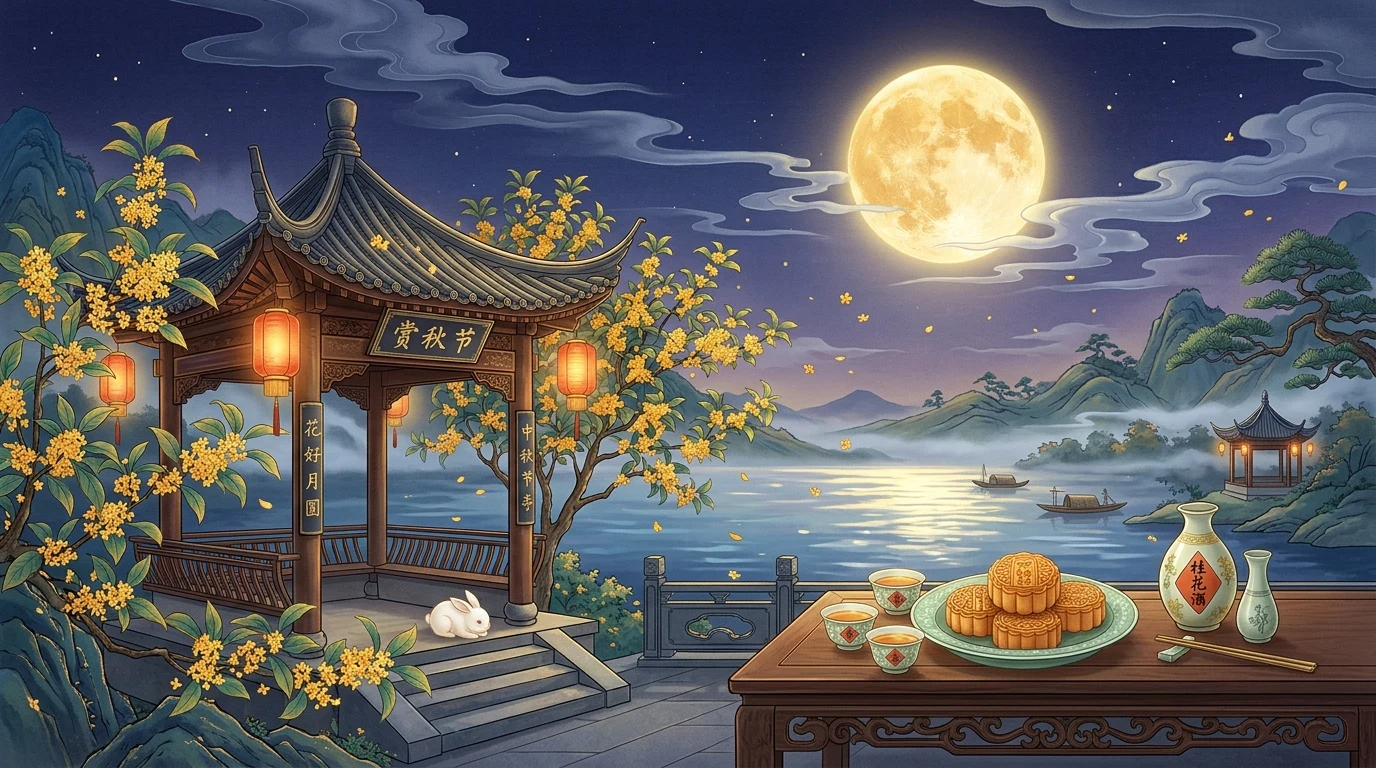
▲ The Mid-Autumn Panorama: Luminous Harvest Moon, Fragrant Osmanthus Blossoms, and Sacred Confectionery of Reunion (Yuanzhen Curated Collection).
I. Historical Genesis & Astronomical Geometry
- Pre-Qin Imperial Liturgy (夕月): The Rites of Zhou and Classic of Rites document that ancient emperors worshipped the sun at the vernal equinox and venerated the moon at the autumnal equinox: "The Son of Heaven greets the sun in the morning and venerates the evening light [the moon] at dusk." The lunar liturgy harmonized human social order with celestial movements.
- Agrarian Autumn Thanksgiving (秋报尝新): In the agrarian calendar, the middle of the eighth month marks North China's harvest climax. Farmers offered fresh millet, wine, and melons to ancestral spirits and territorial deities in gratitude for terrestrial fertility.
- The I Ching Lunar-Phase Dynamic (月体纳甲): In Han dynasty cosmological philosophy codified by Wei Boyang (Cantong Qi), the sun is Li (☲, pure yang radiance with inner yin), while the moon is Kan (☵, abyssal water receiving solar illumination). On the 15th night (the Full Moon / 望), the moon receives pure solar confrontation, fully reflecting universal Yang light (乾卦纯阳之照). It embodies the zenith of yin-yang balance.
- Literary Democratization (Tang to Ming Dynasties): Tang Emperor Xuanzong's legendary pilgrimage to the Moon Palace (广寒宫) transformed an elite royal ritual into a public aesthetic holiday. By the Song dynasty (Dongjing Meng Hua Lu), nocturnal wine taverns operated throughout the night. The Ming dynasty ethnographic work Dijing Jingwu Lue definitively recorded: "The cakes must be circular, the watermelons carved like lotus petals. Daughters visiting family must return to their marital homes; it is named the Festival of Reunion."
II. The Tapestry of Living Traditions
- Altar Moon Offerings (祭月): Families arrange altars in open courtyards facing the rising moon, adorned with round mooncakes, jagged-sliced watermelons, red water chestnuts, pomegranates, and lotus roots.
- Sharing the Circular Mooncake (切饼团圆): The head of the family slices a large communal mooncake into exact portions matching the number of family members. Absent travelers receive an allocated slice, symbolically cementing unbroken familial integrity.
- Osmanthus Blossoms & Golden Nectar (赏桂饮酒): Mid-autumn corresponds to the blooming of golden osmanthus. Fermented sweet osmanthus wine is served to stimulate vitality and invoke longevity.
- Lantern Elevation & Tower Fires (树中秋与烧番塔): In Southern China, intricate bamboo lanterns are suspended high on bamboo poles, and brick towers are filled with straw to create roaring spires of protective sparks.
- Tidal Spectacle at Qiantang River (钱塘观潮): Maximum lunar and solar gravitational alignment triggers the world-renowned tidal bore at Haining, celebrated by poets such as Su Shi.
- Lord Rabbit & Fire Dragon Dances (兔儿爷与舞火龙): Clay figurine "Lord Rabbits" in Beijing protect children from illnesses, while Hong Kong's incandescent straw-and-incense dragon dances purge negative energy.
III. Philosophical & Modern Significance
- The Architecture of Cosmic Reunion (天人团圆): The physical circularity of the moon serves as a celestial mirror for human unity. Su Dongpo's immortal verse: "May we live long, to share the beauty of the moon together, even across a thousand leagues" (但愿人长久,千里共婵娟), transcends space and mortality.
- Dialectical Moderation (月盈则亏): Maximum fullness heralds inevitable waning. This cosmological rhythm instills humility at the height of success and serenity during life's nadirs.
- The Fabric of Social Goodwill: The exchange of seasonal delicacies lubricates social bonds, reconciles estrangements, and sustains communal solidarity.
IV. Cultural FAQ
Q1: Why is the moon frequently fullest on the 16th rather than the 15th night?
Due to the elliptical orbit of the Moon around Earth and speed variances between perihelion and aphelion, the time required to transit from the New Moon (Day 1) to exact astronomical opposition (Full Moon) fluctuates between 14.8 and 15.8 days. Consequently, the astronomical full moon falls on the 16th approximately 50% of the time. Culturally, however, the 15th remains the eternal symbolic zenith.
Q2: Why did traditional customs dictate "Men do not worship the moon, women do not sacrifice to the hearth"?
Rooted in traditional Yin-Yang division: the moon represents Greater Yin (*太阴*), aligning with feminine virtue and beauty. Therefore, moon worship was led by female household heads. The Kitchen God represented Yang fire and household governance, which was historically led by the male head.
Q3: How did the mooncake evolve from military ration to sacred symbol?
Evolving from Central Asian sesame flatbreads in the Han dynasty to imperial pastries in the Tang, the round pastry was formalized in the Song dynasty. By the Ming dynasty, its geometric roundness became permanently codified as the indispensable sacramental symbol of familial and cultural wholeness.